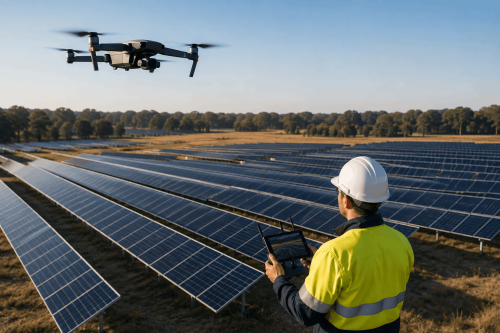
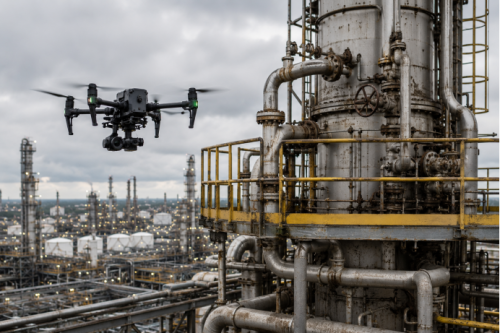
FAA Part 108 is the proposed regulatory framework designed to enable routine Beyond Visual Line of Sight (BVLOS) drone operations in the United States. Experts at AUAV, through this blog, help asset owners understand how these proposed changes can help them with long-term inspection planning and selecting future-ready service providers.
FAA Part 108 is the proposed regulatory framework designed to enable routine Beyond Visual Line of Sight (BVLOS) drone operations in the United States. Although the rule hasn’t been finalised yet, it could potentially influence the way how commercial drone inspections are planned and delivered across industries such as oil and gas, utilities, infrastructure, and energy.
The demand for faster, safer, and more efficient asset inspections continues to grow across the United States. We, at AUAV, believe that understanding what this means for asset owners is important. To answer it quickly, FAA Part 108 can help with long-term inspection planning and selecting future-ready service providers.
Know How Part 108 Builds on Part 107
While commercial drones have already transformed many inspection workflows under FAA Part 107, operational limitations still exist for large industrial facilities, pipelines, and remote assets. FAA Part 108 aims to address many of these challenges by establishing a dedicated regulatory framework for qualifying BVLOS operations.
Today’s commercial drone inspections in the US primarily operate under FAA Part 107, which generally requires drones to remain within the pilot’s visual line of sight. While operators can conduct certain BVLOS missions through FAA approvals or waivers, this process can add complexity and limit scalability for larger inspection programmes.
The proposed FAA Part 108 commercial drones USA framework is intended to create a more consistent regulatory pathway for qualifying BVLOS operations, helping organisations plan inspections more efficiently while maintaining appropriate safety standards.
For asset-intensive industries, this could improve how long linear infrastructure and expansive industrial facilities are inspected in the future.
Part 107 vs Proposed Part 108
|
Current Part 107 |
Proposed Part 108* |
|
Primarily visual line of sight (VLOS) operations |
Framework intended for routine BVLOS operations |
|
BVLOS generally requires FAA approval or waiver |
Standardised regulatory pathway proposed for qualifying operations |
|
Best suited for localised inspections |
Intended to support larger inspection corridors and extended assets |
|
Limited operational range |
Designed for longer-distance commercial missions |
*Based on the FAA’s proposed rule. Final requirements may change before implementation.
Interested in discussing how a commercial drone inspection can help your particular facility?
Let’s talk today!
What BVLOS Could Mean for Industrial Asset Owners?
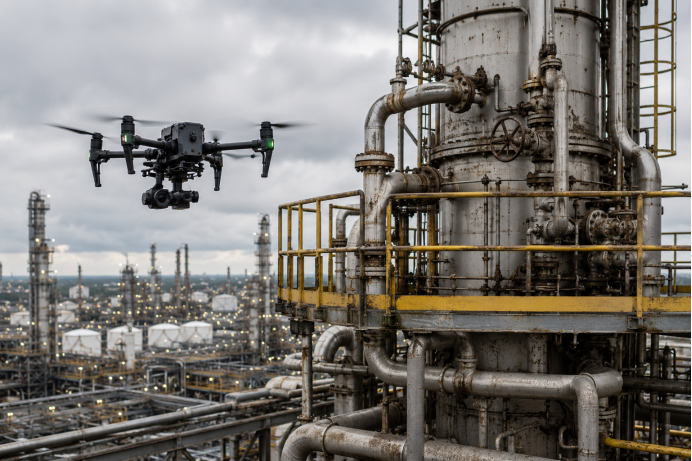
For organisations managing large-scale industrial assets, inspection efficiency is often determined by the size and complexity of the site rather than the inspection technology itself. If implemented, BVLOS drone inspection in the United States operations could improve how organisations inspect-
- Oil and gas pipelines
- Refineries and petrochemical facilities
- Tank farms
- Electrical transmission corridors
- Utility infrastructure
- Rail networks
- Renewable energy assets
Rather than repositioning crews for multiple short flights, qualifying BVLOS operations may allow larger areas to be inspected more efficiently while maintaining consistent data collection across extensive assets.
Why Does this Matter to Large Industrial Assets?
|
Inspection Challenge |
Potential Value of BVLOS |
|
Long pipelines |
Fewer flight interruptions during inspection missions |
|
Large refinery sites |
Wider coverage within a single operation |
|
Remote energy assets |
Reduced repositioning of inspection teams |
|
Utility corridors |
More efficient monitoring across extended infrastructure |
|
Large industrial facilities |
Better continuity for inspection data collection |
What Asset Owners Should Expect
Although FAA Part 108 has generated significant industry interest, it is important to understand what the proposed rule does and does not change. Even if Part 108 becomes effective,
- Engineering inspections will remain essential.
- Maintenance decisions will continue to rely on qualified engineers.
- Site safety procedures and operational controls will remain critical.
- Regulatory compliance will continue to play a central role in commercial drone operations.
Industry Insight
FAA Part 108 hasn’t been finalised yet. Until the final rule becomes effective, commercial drone operators must continue complying with the current FAA regulatory framework, including applicable Part 107 requirements and any required operational approvals.
Organisations planning future inspection programmes should monitor regulatory developments while continuing to work with providers that demonstrate strong compliance and operational experience.
Why Are Houston and Texas Well Positioned?
Houston remains one of the world’s largest centres for oil, gas and petrochemical operations. Combined with Texas’ extensive energy infrastructure, pipelines and industrial facilities, the region represents one of the strongest markets for commercial drone inspection services.
For organisations seeking commercial drone inspection Texas providers, choosing a company with industrial inspection experience, regulatory knowledge and an understanding of complex operational environments is just as important as the drone technology itself.
As BVLOS capabilities continue to evolve, experienced inspection providers will be well positioned to help asset owners integrate emerging technologies into existing asset integrity programmes.
Preparing for the Next Generation of Industrial Drone Inspection
As commercial drone regulations continue to evolve, organisations can benefit from working with providers that understand both today’s compliance requirements and tomorrow’s operational opportunities. AUAV USA delivers professional drone inspection oil and gas USA services that support safer, data-driven inspections across Texas and the wider United States.
Whether you’re planning refinery inspections, pipeline assessments or broader industrial asset surveys, our team can help you explore how commercial drone technology fits into your long-term asset integrity strategy.
Frequently Asked Questions
What is FAA Part 108?
FAA Part 108 is a proposed rule intended to establish a regulatory framework for qualifying Beyond Visual Line of Sight (BVLOS) drone operations in the United States. It aims to support expanded commercial drone capabilities while maintaining appropriate aviation safety requirements.
Is FAA Part 108 currently in force?
No. At the time of writing, FAA Part 108 remains a proposed rule. Commercial operators must continue following the current FAA regulatory framework until the final rule is published and becomes effective.
Will Part 108 replace Part 107?
No. Part 107 is expected to remain in place for many commercial drone operations. Part 108 is intended to provide a separate framework for qualifying BVLOS operations rather than replacing existing regulations.
Who can operate under Part 108?
If finalised, Part 108 is expected to apply to qualified commercial drone operators who meet the FAA’s operational, safety, and certification requirements for routine Beyond Visual Line of Sight (BVLOS) operations.
Does Part 108 apply outside the US too?
No. FAA Part 108 is a proposed US regulation and would apply only to operations within US airspace. Other countries have their own drone regulations governing BVLOS operations.
Which industries will benefit most?
Industries with large or remote assets, including oil and gas, utilities, energy, rail, telecommunications, mining, and infrastructure, are expected to benefit most from routine BVLOS inspections.
Will BVLOS reduce inspection costs?
Potentially. By covering larger areas in fewer flights and reducing crew repositioning, qualifying BVLOS operations could improve inspection efficiency and lower operational costs for suitable industrial assets.
How could Part 108 affect oil and gas inspections?
If implemented, Part 108 could improve inspection efficiency for large industrial assets such as pipelines, refineries, tank farms and energy infrastructure by enabling qualifying BVLOS operations across larger inspection areas. Final operational requirements will depend on the published rule.
Can oil and gas companies operate drones themselves?
Yes, provided they comply with current FAA regulations, including Part 107 requirements. Some organisations operate in-house drone programmes, while others partner with experienced commercial inspection providers.
What equipment is required?
Final requirements are yet to be published. Depending on the completed rule, operators may need FAA-compliant drones, Remote ID capabilities, detect-and-avoid systems, and other approved safety technologies.
How should companies prepare now?
Companies should continue complying with current FAA regulations, monitor Part 108 developments, and work with experienced drone inspection providers that are prepared to adapt as new BVLOS requirements emerge.
Related Services
- Industrial Drone Inspection Services
- Oil & Gas Asset Inspections
- Photogrammetry & Digital Surveying
- Industrial Infrastructure Inspections
- Houston Operations
Ready to discuss your next inspection project?
Meet the experts at AUAV USA to learn how commercial drone inspections can support safer, more efficient asset management while keeping pace with the evolving regulatory landscape!